
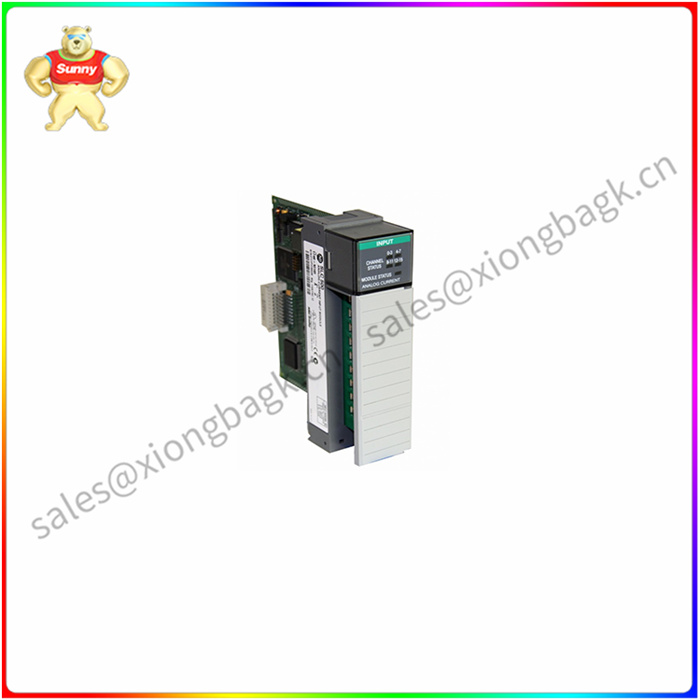
1746-NI16I SLC 16 电压或电流模拟传感器 点模拟输入模块
Allen Bradley 1746-NI16I 是一款模拟输入模块,具有 16 位分辨率和 16 个输入通道。该模块属于 -20 至 20 mA 的电压类别。其 5 伏时的背板电流为 125 mA,而 24 伏时的背板电流为 75 mA。其背板功耗大为 2.425 瓦(0 伏直流时为 625.5 瓦,1 伏直流时为 8.24 瓦)。该模块的共模电压范围相对于模拟公共端子为 +/-10.25 伏。
该装置的相对湿度为5%至95%,无冷凝。其工作温度范围为 -25 至 60 摄氏度(-13 至 140 华氏度),而非工作温度范围在 -40 至 85 摄氏度(-40 至 185 华氏度)之间。其输入阻抗为249;其模拟公共和任何输入端子之间的大电压输入为 ±8 伏,大电流输入为 ±30 mA。该模块的散热为2.43瓦,该模块的AIFM连接器为25针D壳。在机箱中安装模块时,无需从模块上卸下接线端子。但是,如果卸下接线端子,请使用接线端子旁边的标签来标识模块的位置和类型。
模拟输入用于连接模拟过程变量以测量其幅度。它主要用于监控或用作闭环控制系统的反馈信号,以使用通常的比例积分微分(PID)算法的控制方法实现手动或自动控制。没有这种反馈信号,就无法完全实现自动控制。
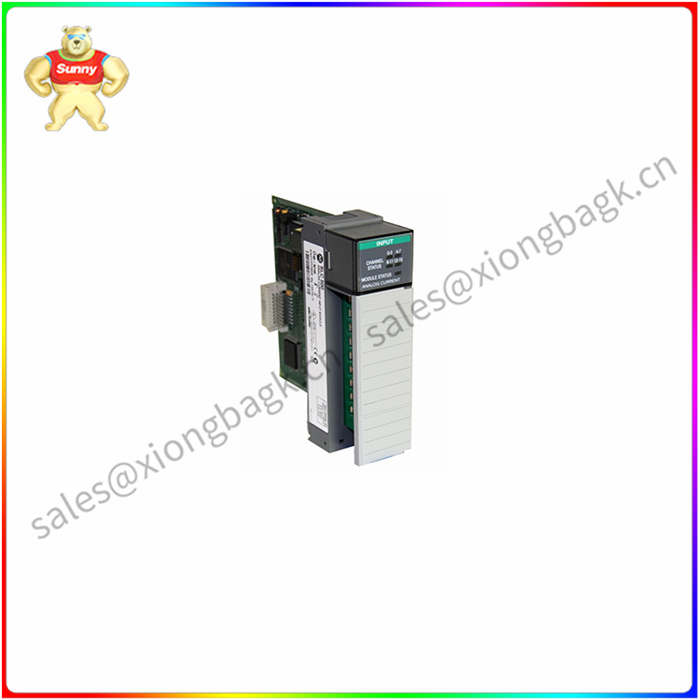
The Allen Bradley 1746-NI16I is an analog input module with 16-bit resolution and 16 input channels. The module falls into the voltage category of -20 to 20 mA. Its 5-volt backplane current is 125 mA, while the 24-volt backplane current is 75 mA. The backplane has a maximum power consumption of 2.425 watts (625.5 watts at 0 V DC and 8.24 watts at 1 V DC). The common-mode voltage range for this module is +/-10.25 volts relative to the analog common terminal.
The relative humidity of the unit is 5% to 95%, and there is no condensation. Its operating temperature range is -25 to 60 degrees Celsius (-13 to 140 degrees Fahrenheit), while its non-operating temperature range is between -40 and 85 degrees Celsius (-40 to 185 degrees Fahrenheit). Its input impedance is 249; The maximum voltage input between the analog common and any input terminal is ±8 volts and the maximum current input is ±30 mA. The module has a heat dissipation of 2.43 watts and the module's AIFM connector is a 25-pin D-shell. When installing a module in the chassis, you do not need to remove the wiring terminals from the module. However, if you remove the terminal, use the label next to the terminal to identify the location and type of the module.
Analog inputs are used to connect analog process variables to measure their amplitude. It is mainly used for monitoring or as a feedback signal for closed-loop control systems to achieve manual or automatic control using the usual control method of proportional integral differentiation (PID) algorithm. Without this feedback signal, automatic control cannot be fully realized.



 QQ在线客服